The Birds of Torch Lake: Our Year-Round Neighbors
True Blue News – February 2026 Edition
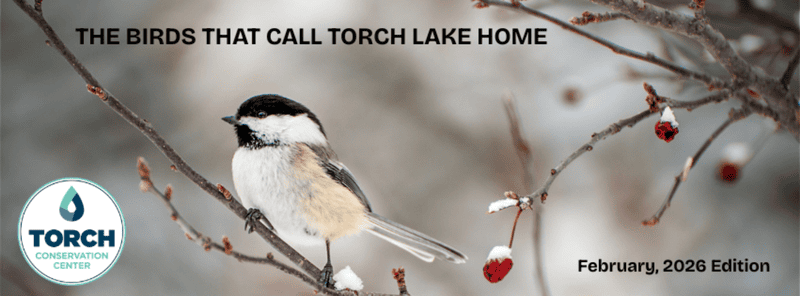
Torch Lake is alive with birds even in the quietest winter months. Some species stay with us year-round, quietly working behind the scenes to keep our ecosystem in balance.
Common year-round birds around Torch Lake include chickadees, nuthatches, woodpeckers, ravens, and bald eagles. These birds rely heavily on insects and insect larvae, along with seeds, nuts, berries, and fish. Woodpeckers and chickadees, in particular, help control tree-damaging insects by feeding on beetles, caterpillars, and ants hidden beneath bark.
These permanent residents are an important reminder that Torch Lake’s health doesn’t pause in winter. When we protect their habitat—native trees, shrubs, and shoreline vegetation—we support a natural system that works all year long.
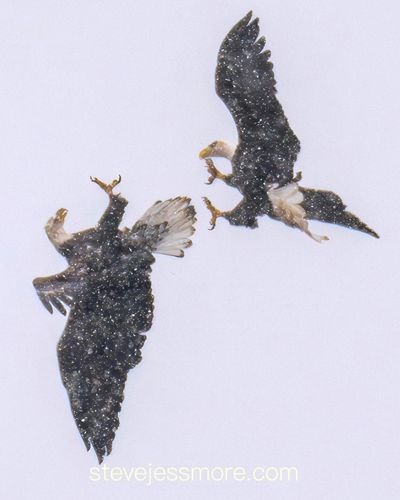
Photo Captured by: Steve Jessmore
In a heavy snow squall, two Bald Eagles attempt a mating and bonding ritural —unsuccessfully—to lock talons midair over a Torch River marsh. One bird is fully mature, while the other appears younger; Bald Eagles take up to five years to reach adulthood and develop the iconic white head and tail feathers.
Summer Migrants: Torch Lake’s Natural Mosquito Patrol
As spring turns to summer, Torch Lake welcomes an entirely new group of feathered visitors. Swallows, purple martins, warblers, wrens, and redstarts migrate here to nest and raise their young.
These birds depend almost entirely on insects during the summer months. Flying insects like mosquitoes, flies, moths, and beetles make up a large portion of their diet. A single swallow can consume hundreds of mosquitoes each day—making them one of the most effective and eco-friendly pest control methods we have.
Healthy insect populations are essential for these birds to thrive. When insect numbers drop due to pesticide use, birds struggle to feed their young, leading to population declines. Protecting insects means protecting birds—and maintaining the balance of Torch Lake’s ecosystem.
Why Skip Chemical Pesticides?
Chemical pesticides:
- Kill the insects birds rely on for food
- Build up in the food chain
- Wash into groundwater and Torch Lake
When insects disappear, birds disappear too.
Try this Option: Gentle Soap Spray
- 1 tsp pure castile soap
- 1 quart water
Spray early morning or evening.
Never use dish soap—it’s harmful to plants and insects.
Extra Bird-Friendly Tips
- Leave seed heads & native plants standing
- Plant native shrubs for berries & insects
- Add bird houses (swallows, wrens, martins)
- Let birds do the work before reaching for sprays

Happy Winter! The Artisan Market Team is busy preparing for the 2026 Season and is looking forward to sharing new art, TCC brandwear and eco-conscious merchandise with our visitors. Stay tuned on social media for more details regarding our 2026 Grand Opening Event planned for Thursday May 21.
Artisan Market officially opens on Friday May 22, 2026.
Hours for the 2026 season:
Monday – Saturday 11:00 – 5:00
Sunday 12:00 – 3:00
Coming this season: this sleek new Torch Lake dry bag — perfect for boating, beach days, paddling, or keeping essentials safe while enjoying the lake we all cherish.
Events Around Torch Lake
- Thursday, February 26th, 1-4pm at Grass River Natural Area The Science of Making Maple Syrup
- Thursday, February 26th, 5:30-7:30pm at 321 Bridge St. Elk Rapids Free session on Composting and Recycling
- Friday, March 6th, 7-8:30pm at Grass River Natural Area Owl Prowl
- Saturday, March 7th, 10am-Noon at Grass River Natural Area Aquatic Insect ID and Stream Monitoring
- Friday, March 13th, 1-3:30pm at Grass River Natural Area NMC River Otters
- Saturday, March 14th, 9-11am at Grass River Natural Area Early Spring Bird Walk
Your support directly fuels education, outreach, and stewardship efforts that care for Torch Lake for generations to come.
More True Blue News
Copyright © 2026 · Torch Conservation Center, Inc. P.O. Box 1142 Bellaire, MI 49615
Site design by Widow's Peak Web Design.