
Leave the Leaves
True Blue News – October 2026 Edition
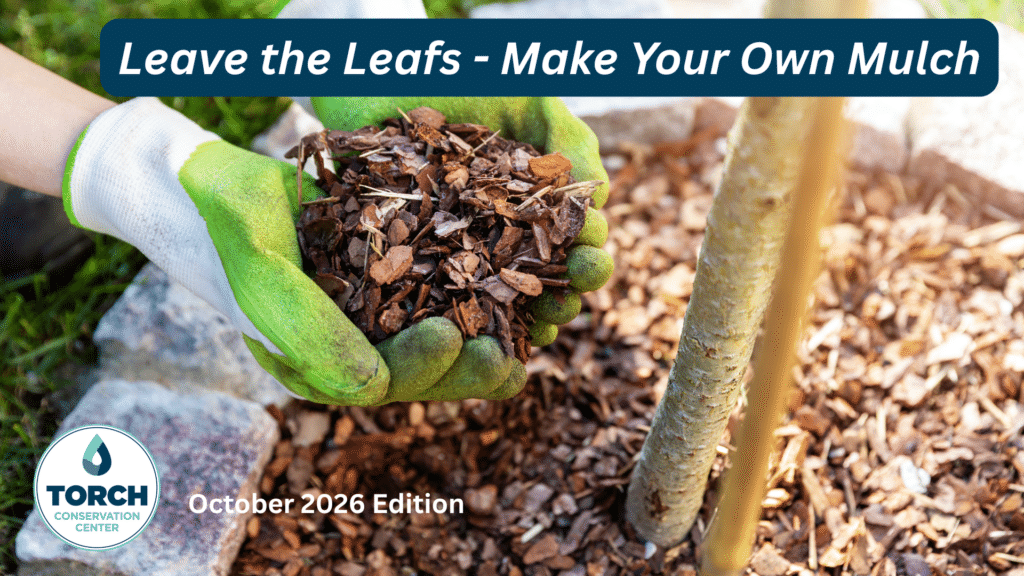
Turn Fall Cleanup Into Something Good!
Fall in Northern Michigan means beautiful color—and eventually, a whole lot of leaves on the ground.
Before you rake them all to the curb or bag them up, consider putting those leaves to work in your own yard. Fallen leaves can be turned into a simple, free mulch that benefits your lawn, gardens, trees, and the surrounding watershed.
What is leaf mulch?
Leaf mulch is simply fallen leaves that have been chopped or shredded into smaller pieces. As those leaves break down, they return organic matter and nutrients to the soil—much like they naturally do on a forest floor.
And the best part? You already have everything you need right in your yard.
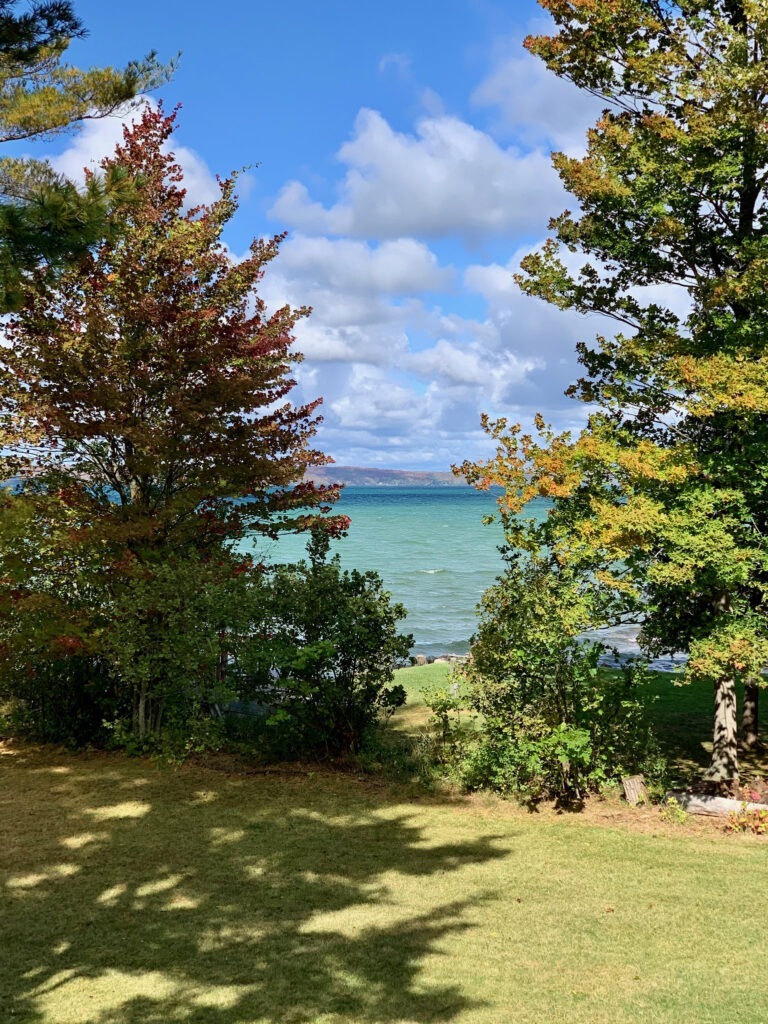
Photo: Paul Beaupre
How to make leaf mulch
One of the easiest methods is to simply mow over dry leaves with your lawn mower. Make a few passes until the leaves are chopped into small pieces.
You can leave a light layer right on the lawn, where it will gradually break down and feed the soil.
For garden beds, around trees, or beneath shrubs, collect the shredded leaves and spread them in a loose layer a few inches deep. Keep mulch a few inches away from tree trunks and the bases of plants rather than piling it directly against them.
Have more leaves than you can use right away? Create a leaf pile or place shredded leaves in a simple bin and allow them to break down over time. Eventually, you’ll have rich leaf mold that can be added to garden soil.
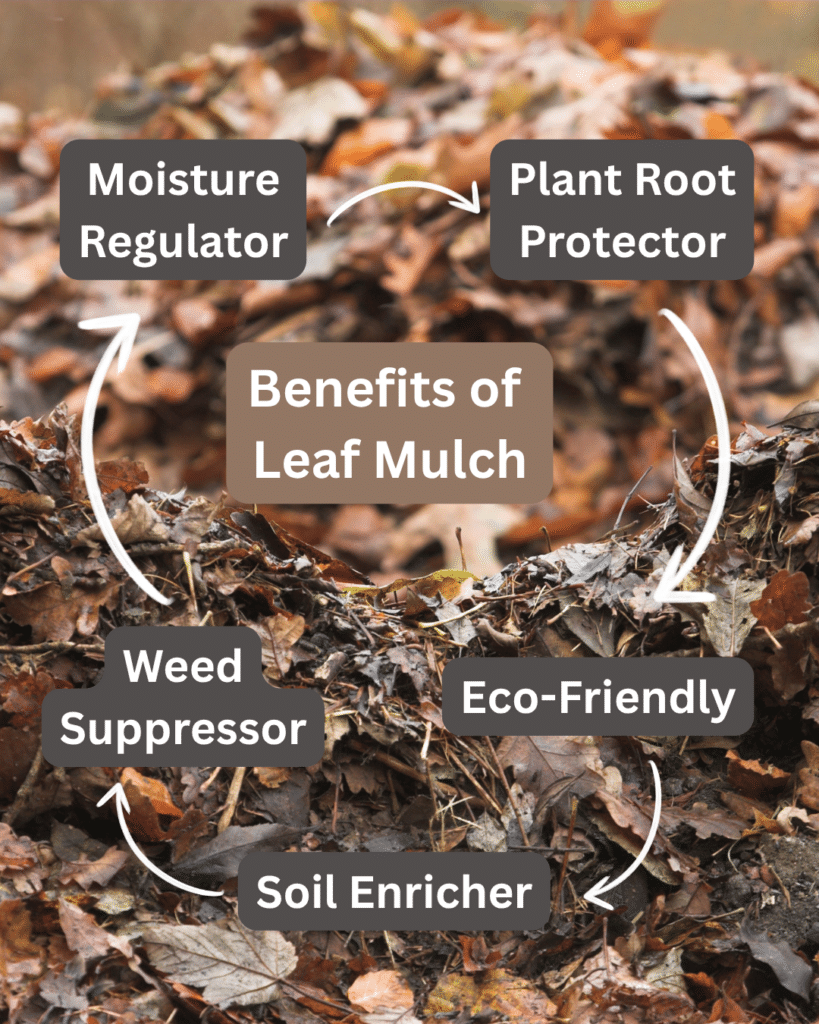
Why keep your leaves?
Using leaves at home has some pretty great benefits:
- Adds organic matter to the soil as leaves naturally decompose.
- Helps hold moisture, which can reduce the need for watering.
- Suppresses weeds when used around garden beds and landscaping.
- Provides habitat for insects and other small creatures that overwinter among fallen leaves.
- Reduces yard waste by keeping a valuable natural resource right where it can be used.
- Helps care for our waterways by keeping piles of leaves out of streets and storm drains, where nutrients can eventually make their way into nearby lakes and streams.
One small fall change
This fall, instead of thinking of leaves as something that needs to be hauled away, think of them as something your yard can reuse.
Mow them. Mulch them. Compost them. Leave some in garden beds.
Sometimes caring for Torch Lake starts with something as simple as what we do with the leaves in our own backyard.
Care for Torch Lake. It all adds up.
More True Blue News