

Swimmer’s Itch
Key Facts
Swimmer’s itch is a result of an allergic reaction in the skin caused by cercariae, or larvae of a specific parasite, entering the skin. The itchy red bumps are a result of each individual cercariae entering the skin.
The severity of the rash can vary from person to person – some people may experience mild symptoms like a low-grade fever or lightheadedness. The rash can last several days up to several weeks. This is a natural immune response and is not contagious.
Cases have been reported throughout the United States, Canada, and many other countries.

Photo: Center for Disease Control
Swimmer’s Itch Cycle
- Step 1: Waterfowl serve as the host
- Step 2: Eggs are passed into the water (typically via the feces)
- Step 3: The eggs hatch into a free swimming stage that infects a snail host
- Step 4: In the snails, the larvae further develop into wormlike larvae, called cercariae, and emerge from infected snails to seek out a new avian host
- Step 5: Cercariae then rise to the surface of the water in search of a host, which is where the accidental exposure occurs and leads to swimmer’s itch in humans
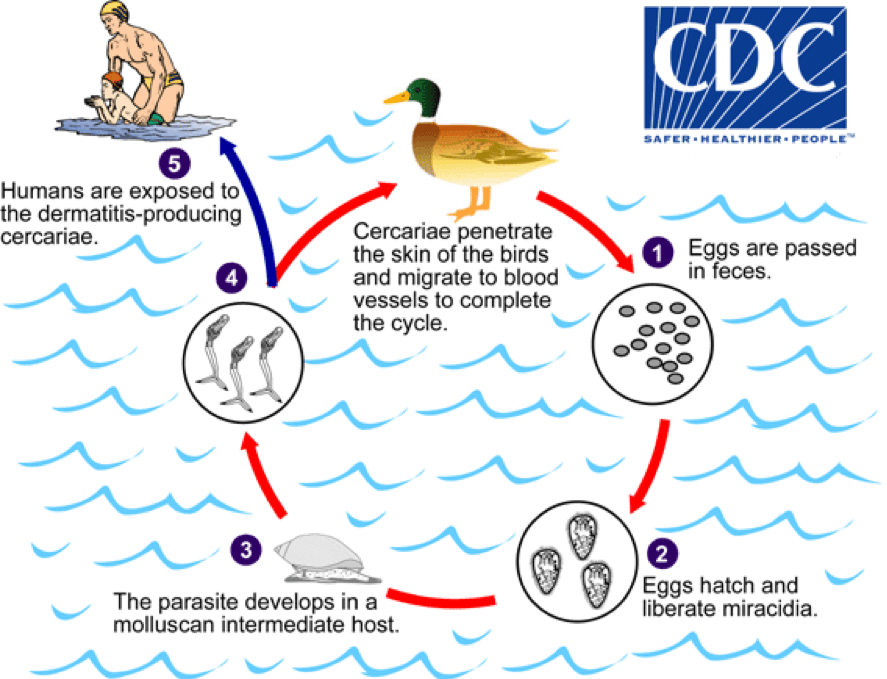
Image: Center for Disease Control
So What Can You Do?
- Timing matters: Swim later in the day! Cercariae are most common in the morning and decline significantly by late afternoon as they die, are eaten, or are pushed to shore.
- Protective clothing: Snug-fitting swimwear, like rash guards, reduces skin exposure as the cercariae cannot penetrate these materials.
- Wind effects: Onshore winds can push cercariae toward swimming areas. While stronger winds may eventually move them onto shore, they can temporarily concentrate in shallow water—especially near seawalls. Extra caution is recommended for children playing close to shore during these conditions.
- Swim Deep: Deeper water does not have snails, which means a lower likelihood of cercariae hanging out at the surface!
For more tools and information visit Freshwater Solutions.
*There is anecdotal evidence that water barriers, such as lotions or creams, may reduce or prevent reaction. This is not currently supported by science, but if you have something that works for you – use it!
What is the treatment?
If you develop swimmer’s itch:
- Use over-the-counter anti-itch or hydrocortisone creams such as Calamine lotion
- Consider an oral antihistamine to reduce itching
- Avoid scratching to prevent infection
- Seek medical care if symptoms are severe
You can also report cases through tracking tools such as swimmersitch.info to help monitor outbreaks.
WATERpedia: the “One-Stop Shop” for Water Science A-Z